Root Canal Treatment (Endodontics)
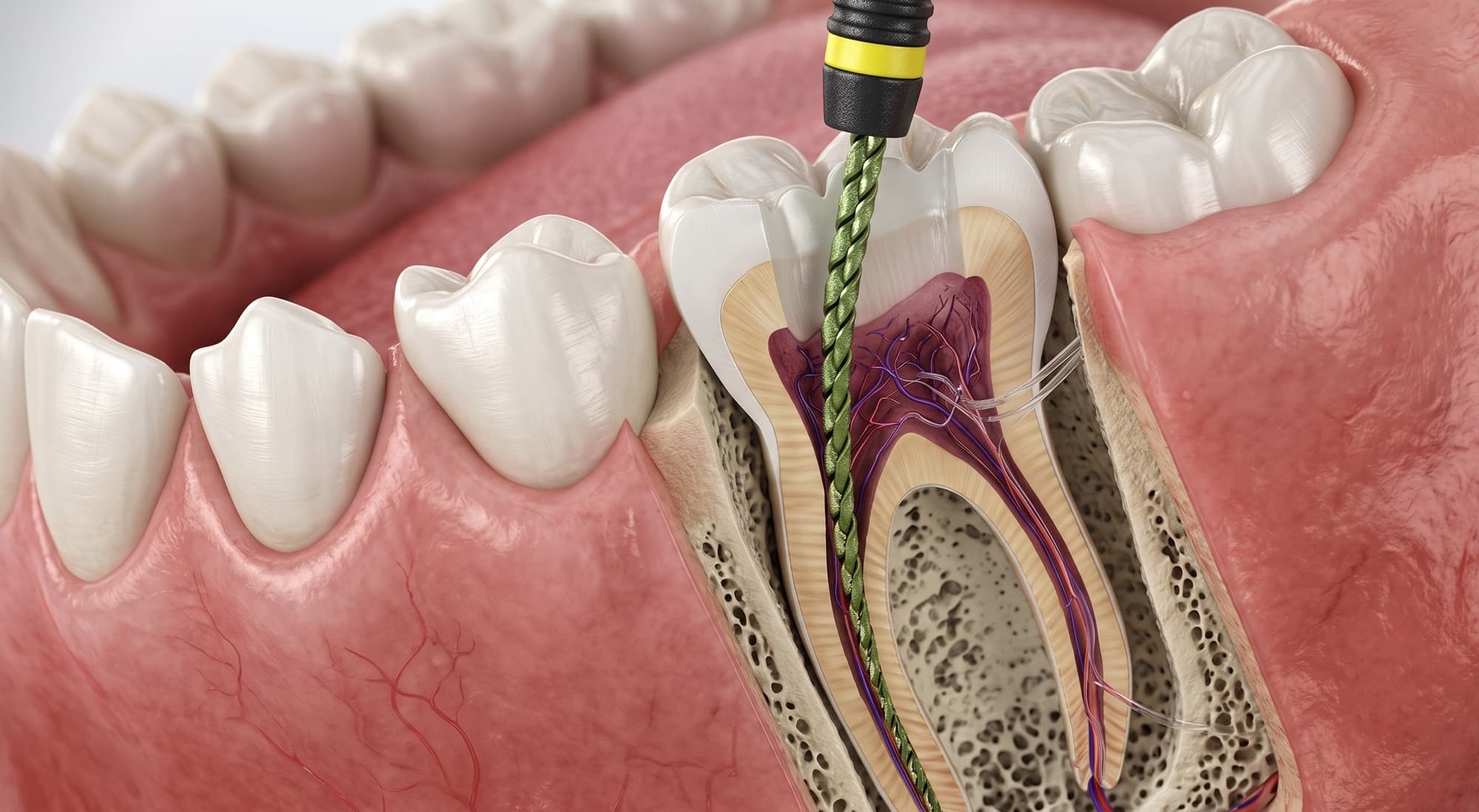
Root canal treatment is an endodontic treatment that aims to preserve the natural tooth by removing the tooth nerve (pulp) damaged by deep decay, trauma or inflammation, then cleaning and filling the root canals.
What is it?
When the blood vessel and nerve tissue inside the tooth becomes inflamed as a result of advanced decay or trauma, pain and infection may occur. In root canal treatment this tissue is removed, the root canals are shaped and disinfected, and they are filled with a suitable material so that the tooth can be kept in the mouth.
The procedure is usually performed under local anaesthesia and can be carried out with microscope assistance when needed. The aim is to preserve the tooth so it can continue to function, rather than extracting it.
Who is it for?
Symptoms such as prolonged sensitivity to cold and heat, spontaneous toothache, discolouration of the tooth or swelling of the gum may indicate the need for root canal treatment. A definitive assessment is made with examination and radiography.
For severely damaged teeth that cannot be saved, different treatment options may come into consideration. Whether the tooth is suitable for root canal treatment is determined by the dentist.
How does the process work?
The process begins with examination and X-ray assessment. After local anaesthesia, the tooth is accessed, the root canals are cleaned, shaped and filled. Depending on the case, treatment may be completed in a single session or spread over several sessions.
After root canal treatment, the tooth is usually restored with a filling or crown; this helps support the tooth's resistance to fracture.
Aftercare and maintenance
Mild sensitivity may be felt for a few days after the procedure; this often eases on its own. Regular oral hygiene and follow-up visits help the treated tooth keep its function over the long term.
Frequently asked
Is root canal treatment painful?
Because the procedure is performed under local anaesthesia, pain is usually not felt during treatment. There may be mild sensitivity for a few days afterwards; in most cases this subsides on its own.
How many sessions does root canal treatment take?
The number of sessions varies according to the condition of the tooth and whether there is an infection. Some teeth are completed in a single session, while others may require more than one.
Is a crown needed after root canal treatment?
For teeth with significant loss of structure, a crown is often recommended to support resistance to fracture. The decision is made according to the amount of healthy tissue remaining in the tooth.
Come to my clinic in Alsancak. Message on WhatsApp — I reply within 24 hours.
Results of any surgical or interventional procedure may vary from person to person. We recommend getting detailed advice from your dentist beforehand.